How to Track Your Brand in AI Answers
A single AI answer carries almost no signal about your brand. Here is the rig that does: a frozen prompt set, five runs per model, and four fields recorded on every run.

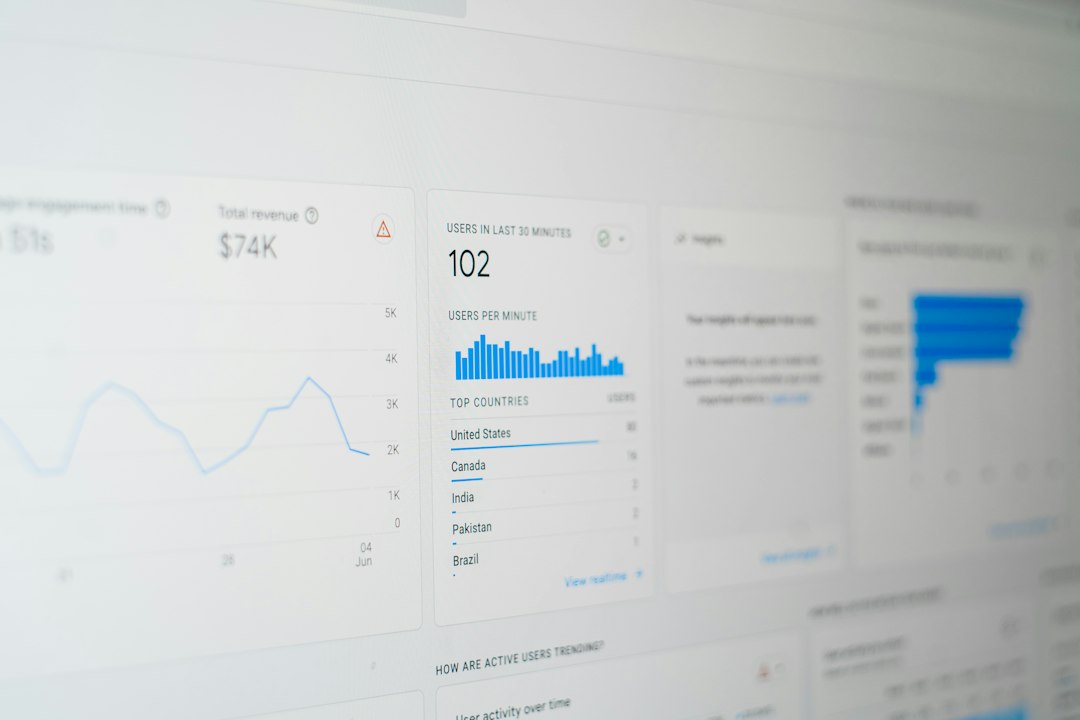
Photo by 1981 Digital on Unsplash
You track your brand in AI answers by running a fixed set of buyer questions through the models your customers actually use, on a repeating schedule, and recording four things every time: whether a model named you, where you sat in the answer, which sources it cited, and how it described you. One answer proves nothing. The trend across many runs is the measurement, and that distinction is the whole discipline.
This matters because the old instrument no longer reads the room. Rank tracking assumed a stable list of ten blue links you could check once a day and compare against yesterday. Generative answers do not work that way. Ask the same question twice and you may get two different shortlists, with your name in one and missing from the other, for reasons that have nothing to do with your marketing.
Why a Single AI Answer Tells You Almost Nothing
The strongest evidence on this comes from a July 2026 preprint by Dmitrij Żatuchin, who collected 12,933 model responses covering 20 brands, 8 languages and 3 models, then split the variation into its separate sources using a crossed random-effects design.
The numbers are humbling. Brand identity, the thing you are trying to measure, explained 1.5% of the variation in a single response, an intraclass correlation of 0.0146. Pure resampling noise accounted for 34.8%. The language of the query explained 26.5%, the largest systematic source in the study. Reliability for ranking brands came out at roughly 0.01 from one answer, against about 0.36 once the measurement spread across repeats, paraphrases, models and languages.
Read that again. A screenshot of ChatGPT naming your competitor is not data. It is one draw from a noisy distribution, and the distribution barely knows who you are.
Two practical rules fall out of this. First, repeat every prompt. Second, spread the measurement across models and languages rather than hammering one prompt into one model, because breadth buys more reliability than depth does. The same study found that a sixth repeat of a prompt cut relative-error variance by only 0.0003, so there is a point where more repetition stops paying for itself.
Step 1: Build a Prompt Set That Mirrors Real Buying Questions
Start with questions, not keywords. A buyer does not type "fractional cmo pricing" into ChatGPT. They ask what a fractional CMO should cost for a company their size, or whether one beats hiring an agency, or who the good ones are in their industry.
Aim for 30 to 60 prompts, grouped by where the buyer sits in the decision:
- Category discovery. "Who helps mid-market companies with marketing leadership?"
- Comparison. "Fractional CMO versus a marketing agency, which is better for a $10M business?"
- Shortlist. "Best fractional CMO firms for B2B services."
- Objection. "Are fractional CMOs worth it, or is it a fad?"
- Local or vertical. "Marketing consultants for manufacturers in the Midwest."
Write them the way a person speaks. Then freeze the list and version it. If you rewrite your prompts every month you have thrown away your baseline, and you will mistake your own edits for movement in the market.
If you sell in more than one language, track each one on its own. The variance study puts query language ahead of every other systematic factor, which means a brand can look healthy in English and invisible in German.
Step 2: Pick the Surfaces That Matter to Your Buyers
Coverage has moved fast. Similarweb data reported by TechCrunch in July 2026 put AI Overviews on about 43% of Google searches, up from roughly 15% a year earlier, with visits to Google's AI Mode climbing from 126 million in June 2025 to 279 million in May 2026.
Referral share is concentrated, but it shifts. Trakkr's index, built from aggregated Google Analytics 4 data, reports that ChatGPT sent 79.2% of AI referral page views to 6,632 websites in the 30 days to 1 November 2026, down from 82.4% a month earlier.
Track ChatGPT, Google AI Overviews and AI Mode, Perplexity and Gemini at minimum. Add Claude and Copilot if you sell to enterprise buyers. The share leader in that index slipped roughly three points in a month, so a single-engine program ages badly.
One caution about what a mention is actually worth. The same Similarweb analysis found that only 6.8% of US ChatGPT desktop queries carried citations as of May 2026. A mention in an answer and a clickable link back to your site are different outcomes, and your tracking should keep them in separate columns.
Step 3: Record Four Fields on Every Run
Most teams record one field, a yes or no on whether the brand showed up, and then wonder why the report never leads anywhere. Record four instead.
- Presence. Did the model name the brand at all? Capture it per run, so you can express it as a rate rather than a verdict.
- Position. Where did you appear? First in a numbered list, buried in the sixth paragraph, and named only as an also-ran are three very different results that collapse into the same checkmark if you are not careful.
- Citation set. Which URLs and domains did the answer draw from? This is the field that tells you what to do next, and it is the one most dashboards bury.
- Framing. How did the model describe you? "A boutique firm for early-stage startups" and "an enterprise partner" are both survivable. "Known for poor reporting" is a fire.
The Field Most Teams Skip Is the Citation Set
If a model recommends three competitors and cites four industry roundups, you have not found a content gap on your own site. You have found four pages where you are missing, and that is a concrete, assignable task with an owner and a date. Our own audit work turned up that pattern again and again: the brands that showed up were the ones already present in the sources the models kept reaching for. There is more on the mechanics in We Audited 50 Sites for AI Visibility — What We Found and in How to Get Cited by ChatGPT, Perplexity & AI Overviews.
Step 4: Set a Cadence You Can Actually Hold
Five runs per prompt per model is a sensible default, given that the sixth adds almost nothing. Weekly collection with monthly reporting suits most companies. Quarterly is too slow to catch a model update that reshuffles your category; daily is noise with a spreadsheet attached.
Keep the rig boring. Same prompts, same models, same day of the week, logged with timestamps and the full raw response text. When a number moves, that raw text is the only way to tell whether the market shifted or the model did.
Step 5: Connect It to Traffic and Pipeline, Carefully
Visibility without a downstream number is theater. Two warnings here, though.
The first is measurement plumbing. A lot of AI referral traffic lands in GA4 as direct, so build a custom channel group with a regex for the AI domains and place it above the default referral channel. Until you do that, your AI traffic hides inside a bucket you already ignore.
The second is borrowed benchmarks. The figure everyone quotes, that an AI search visitor is worth about 4.4 times an organic one, traces back to a Semrush study from 2025, and a dozen posts since have relabelled it as 2026 research. Independent results scatter widely. Amsive's study of six months of GA4 data from 54 sites with validated form fills or purchases found organic converting at 4.6% against 4.87% for LLM referrals, a gap that vanished under a paired t-test at p = 0.794. Adobe Analytics data reported by TechCrunch in April 2026 found AI-referred traffic to US retail sites converting 42% better than non-AI traffic in March 2026, having converted 38% worse a year earlier, on first-quarter AI traffic up 393% year over year.
Those findings are less contradictory than context-bound. Retail checkout behaviour in March tells you very little about B2B lead quality in your category. Measure your own, and quote your own.
Step 6: Buy a Tool, or Build the Rig Yourself
A scheduled script, an API key per model and a spreadsheet will get you a defensible program. Plenty of teams start there, and the raw logs you keep are worth more than any dashboard you rent.
If you buy, the market in late 2026 runs from roughly $29 a month at the entry end to $199 and up for platforms with wider engine coverage. Profound, Otterly.AI, Peec AI, Ahrefs Brand Radar, Semrush's AI visibility toolkit and SE Visible come up most often. Engine lists and prices differ between a vendor's own pricing page and the comparison posts written about it, so check the primary source before you sign.
Three questions separate the serious tools from the pretty ones:
- How many times do you run each prompt, and do you report the variance?
- Do you hand me the citation set and the raw response text, or only a score?
- Can I export everything, history included, if I leave?
A vendor who cannot answer the first question is selling you single draws from a noisy distribution and calling it a metric.
What to Do With What You Find
A low mention rate is a sourcing problem far more often than a content problem. The models reach for pages they already trust, and your job is to be present and accurate on those pages. In practice that means earning mentions in the roundups and comparisons that keep showing up in your citation sets, keeping your own facts machine-readable, and giving the models something unambiguous to repeat about who you serve and what you do.
The mechanics of that sit in two places: Structured Data for AI Search covers the markup worth writing, and llms.txt: What It Is and Why Your Site Needs One covers the file that helps assistants find your content in the first place. For watching where rivals sit across models rather than only your own position, our competitor intelligence work does that job.
The Bottom Line
Tracking a brand in AI answers is a sampling problem wearing the costume of a reporting problem. Fix a prompt set, repeat it about five times per model, spread it across the engines and languages your buyers use, and record presence, position, citations and framing every single run. Then read the trend, never the screenshot. The published variance work says a single answer carries almost no signal about your brand, roughly 1.5% of what you see. Build the rig that averages the rest away, and you will have the thing most competitors in your category still lack: an honest read on whether the machines now recommending vendors have any idea you exist.
Frequently Asked Questions
Weekly collection with monthly reporting works for most companies, with around five runs per prompt per model. Quarterly checks are too slow to catch a model update that reshuffles your category, and daily checks mostly add noise.
No. A 2026 variance study of 12,933 model responses found brand identity explained only about 1.5% of the variation in any single answer, so one screenshot is a single draw from a noisy distribution rather than a measurement.
ChatGPT, Google AI Overviews and AI Mode, Perplexity and Gemini cover most buyer behaviour, with Claude and Copilot added if you sell to enterprise. ChatGPT still sends the large majority of AI referrals, but its share has been slipping month over month, so a single-engine program ages quickly.
Model sampling is probabilistic, and resampling noise alone accounted for roughly a third of the variation in published measurement work. Prompt wording, the query language and the model itself add more, which is why repeated runs across several engines beat one careful prompt.
Only partly. A mention without a link produces no session at all, and much of the traffic that does arrive gets filed as direct unless you build a custom channel group that matches the AI referral domains and sits above the default referral channel.
A scheduled script, an API key per model and a spreadsheet will give you a defensible program, and the raw logs are often worth more than a rented dashboard. Paid platforms mainly buy wider engine coverage and less maintenance; ask any vendor how many times they run each prompt and whether they return the citation set.
Want to Know Whether AI Models Name You at All?
We run the prompt set for you and show you where you sit across ChatGPT, Perplexity, Gemini and AI Overviews — plus the sources those answers lean on.
Get a Free AI Visibility Audit